
ELLA BECKETT
LINDERHAVEN
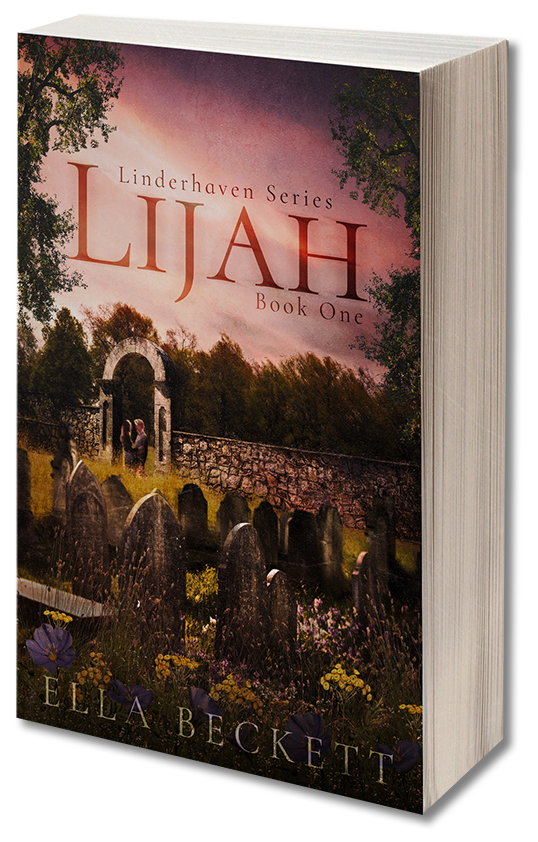
LIJAH
BOOK ONE
Wait.
Are they just going to leave me here?
As the Enforcers sauntered away, the kid clutched the state-issued duffel bag to his chest and watched them return to their squad car. He wasn’t sure if their departure made him feel better or worse. What was this place? And who was the strange woman with her hand clamped on his shoulder?
ELLA BECKETT
LINDERHAVEN
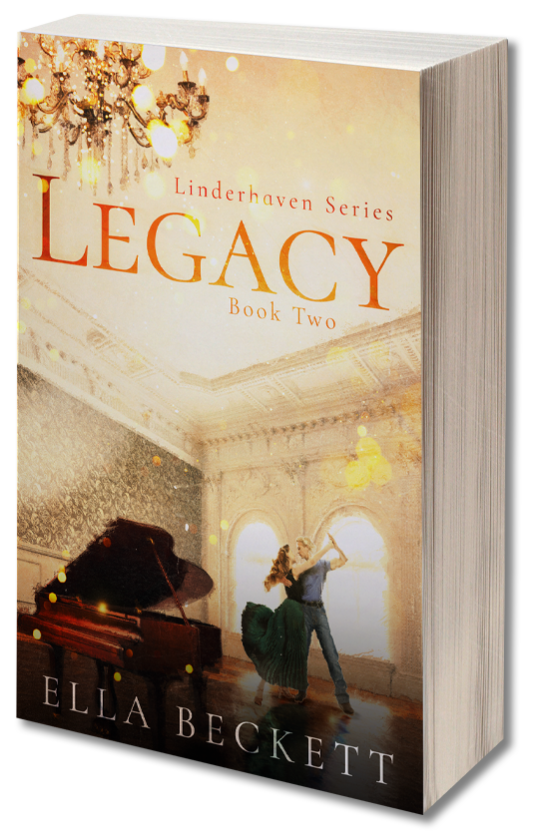
LEGACY
BOOK TWO
Alien dreams entangled him in a sense of eerie anticipation, radiating from his brain, his bones, his blood. Something shifted toward him. Beckoned to him. Called him back to Linderhaven.
A twisty tale of suspense. An atmospheric setting. A coming of age story that delivers hard lessons, sweet first love... and hidden danger.
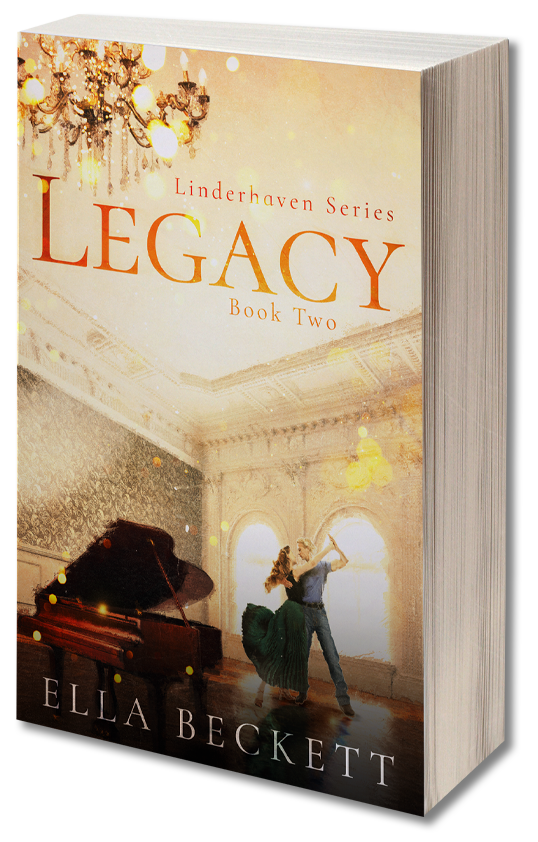
Not every first love is unforgettable, but his is haunting. What will Lijah Driver do for a second chance? He'll push the world off its axis...
Available for pre-order on Amazon, Apple Books, Kobo and barnesandnoble.com.
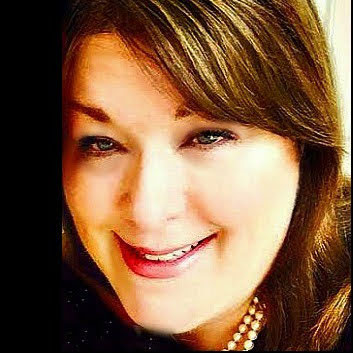
Ella Beckett
Ella Beckett believes that human-created stories are the true foundation of civilization. Thus, she humbly asserts that it is the stories she writes that are important, not herself.
She is a member of the Alliance of Independent Authors, the Authors Guild, Chicago-North Romance Writers, and Southwest Ohio Writers Club, actively supporting other indie authors.
Ella is blissfully married to the boy she fell in love with at fifteen, so she has firsthand knowledge of love's power to endure.
Are any scenes in her books autobiographical?
She will never tell.
The Linderhaven Series Q & A
Q: Since the protagonist and titular character of Lijah is a teenage boy, does that mean the Linderhaven series is Young Adult fiction?
A: The Linderhaven series is not Young Adult Fiction, it is Adult Fiction. At the start of the series, Lijah is a kid, just short of sixteen, but many of the topics and events in the book are adult-themed. Also, the story is told, not just through his point of view, but the POV’s of various characters, many of whom are adults.
Q: What made you decide to write it that way when so many popular books these days seem to be written first-person?
A: I get bored easily. Why stay in just one head for an entire book? It’s a personal preference, I guess.
Q: With all the political intrigue and adult themes -- an off-page murder, domestic abuse scenes, discussions of exploitation -- could a younger audience enjoy the books?
A: Maybe Lijah, the first book in the series, but as the characters themselves age, the books become less appropriate for teenage readers.
Q: Why is that? Are Legacy and other future books violent? Are they spicy?
A: Legacy has little to no violence but is much spicier than Lijah. I felt that keeping the love scenes in Lijah mild and clean, albeit with all the same yearning and emotion, was appropriate for a sweet first-love/coming of age type of story, but I enjoyed seeing my characters become adults, including growing into their sexuality and sharing that important aspect of life with each other.
Q: So, with spicy love scenes and a romantic arc – would you call the Linderhaven books Romance novels?
A: No, but the romantic subplot is a very important element in all the books. I consider the Linderhaven series to be Speculative Suspense with a strong romantic element. The stories break some of the rules of the Romance genre, so I can’t call them that no matter how lovely the love parts are.
Q: Not historical fantasy, either?
A: Not exactly. The Linderhaven books depict an alternate history; it’s the real world, but there’s been a significant historical divergence. The story takes place years later, in the aftermath of those fictional events. Something in history happened differently, and here is how things changed as a result. The books portray a realistic, contemporary world. Just different.
Q: What happened, and how did things change?
A: I started with the question, “What if the Gilded Age never ended?” From there, I learned that many historians consider the Banking Crisis of 1907 as the beginning of the end of the Gilded Age. So, what if those events happened differently? What if instead of a bailout, there was a coup? What would be the natural progression of events from there?
Q: And what did you decide?
A: I explored the idea of America becoming no longer a democracy, but an aristocracy. I figured for that to happen, America as we know it would have to come to an end. So what would take its place?
Q: And you came up with the nation of New Anglia. How did you decide on that name?
A: Well, if you think about people who were prominent during the Gilded Age – the Morgans, the Vanderbilts, the Rockefellers, etc. – many of them were Anglophiles, huge admirers of the English aristocracy, bending and spending to wed their daughters to nobility. Buying titles, so to speak. So, if such people were given the chance to emulate Britain, I think they would do it. And they would name their new country something that shows the alignment.
Q: If the story is roughly based on actual historical figures, why don’t any Astors or Vanderbilts or Carnegies appear in your book?
A: Out of respect for actual people, including their living descendants, I chose not to “rewrite history.” Instead I replicated historical conditions but put fictional characters in place of real people. There are no portrayals of actual people, living or dead in the story.
Q: The society portrayed in the books is governed by the Council of the Seven Families, an elite group that takes charge of everything. How do they gain control?
A: Suppose seven prominent families bankrolled or otherwise took part in the coup to form the new country. I imagine they would set things up in a way that protected their status quo and allowed their own kind to prosper. I also think in times of economic and social upheaval, ordinary people sometimes sacrifice their long-term rights and interests in exchange for short-term security.
Q: It’s interesting that you made the Seven Families such a diverse group. Not one hundred percent Euro/Caucasian but including some people who seem to be of Eastern and African descent. Why did you do that?
A: Why not?
Q: Fair enough. It’s also interesting that, while class and gender are still dividing lines in the stories, racism and homophobia don’t appear in this new world. Why is that?
A: It could be the natural result of centralizing power among a small but diverse group of people. If roughly half of them are not White, if presumably some of them are gay, I imagine they would say, “Since we’re reinventing our system, how about not making this stuff an issue?” And I imagine, after more than a century, those ideas would be ingrained.
Q: But it seems like other things that “got fixed” in reality remain broken in your fictional world. The practice of arranged marriage, for instance.
A: Isn’t that how it always seems to go? Advance in one area, lose ground in another.
Q: Tell me more about your main character, Lijah Driver. In spite of going through this extraordinary experience, he seems like a pretty normal kid. It would be fair to say he’s even kind of a jerk at times.
A: Yes, if you’re looking for a perfect, heroic protagonist, don’t look here! To me, Lijah is very appealing, but at times ungrateful, clueless, self-destructive – just like a lot of fifteen/sixteen-year-olds I’ve known. He finds himself in strange, uncomfortable circumstances, and his instinct is to lash out. Or sulk. The attention and affirmation he receives from his sweet girlfriend make him wonder if he’s attractive to other girls, too. At times he can be, as Mother Ruth points out, “a self-centered little ass.” But for all that, he’s so lovable, he has such a big heart, that you can’t help but be on his side.
Q: Legacy is the continuation, ten years later, of the Lijah story. Is there a third book in the works?
A: Yes. Leandros, Book Three, will go back in time to tell the love story of Lijah’s parents. Readers of Book One may think they know that story already… but don’t be too sure!
Q: Do you envision more books in the series?
A: Absolutely. With characters like these, more Linderhaven books are a given.
Q: Do you have a favorite book, and do you recommend reading them in order?
A: I love both books, but I have to admit Legacy is my favorite of the two. And no, you don't have to read them in order, but if you start with Legacy, you're going to get spoilers for Lijah. You're also going to be left with questions that are only answered by reading the first book. Don't say I didn't warn you."